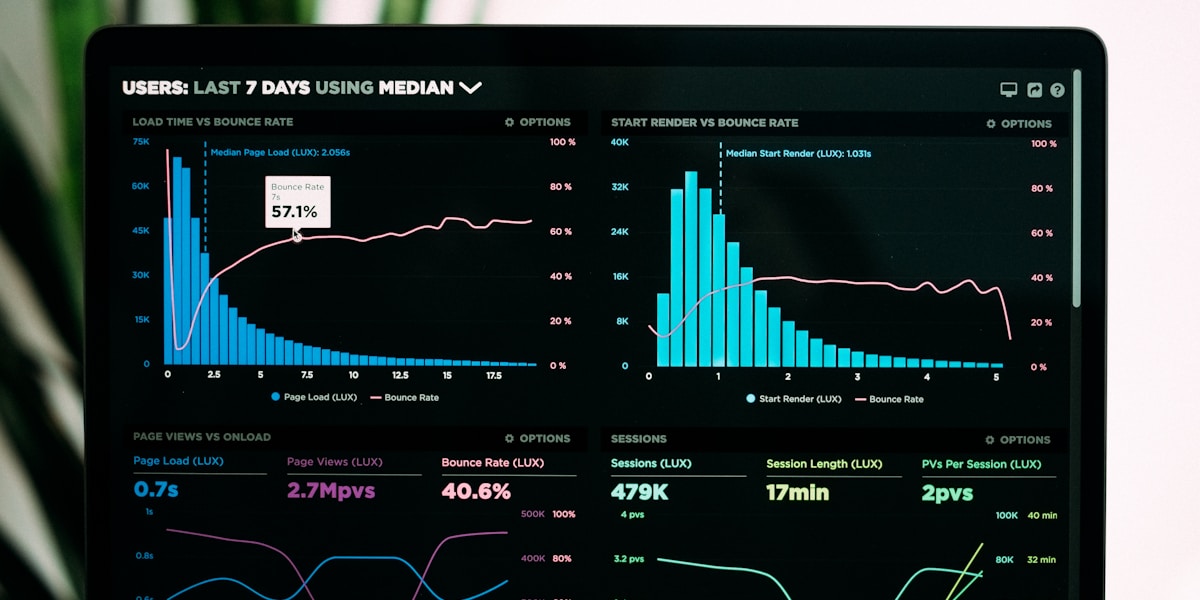
Real-time dashboards are sexy. They're also expensive, complex, and often unnecessary.
Let's talk about when you actually need them.
The Real-Time Trap
Your CEO sees a competitor's dashboard updating every second and says: "We need that!"
But do you really?
The Hidden Costs
Real-time infrastructure requires:
- Streaming data pipelines ($$$)
- High-performance databases ($$$)
- Constant monitoring (engineering time)
- More bugs (complexity = problems)
Question: Will a 5-second delay vs 5-minute delay change any decision you make?
If the answer is no, you don't need real-time.
When You DO Need Real-Time
Operations & Monitoring
System Health Dashboards
┌─────────────────────┐
│ Server CPU: 87%     │ ← Need to know NOW
│ Error Rate: 2.3%    │ ← Need to act NOW
│ Response Time: 245ms│ ← Degrading NOW
└─────────────────────┘
If your servers are on fire, you need to know immediately.
Refresh Rate: 5-10 seconds
Customer Support
Live Queue Monitoring
Current Queue:
- 47 chats waiting
- Average wait: 8 minutes
- Available agents: 3

⚠️ Add more agents NOW
Can't wait 15 minutes for batch update.
Refresh Rate: 10-30 seconds
High-Frequency Trading
Obvious use case. Milliseconds matter.
Refresh Rate: Real-time streaming
Live Events
Running a webinar with 1,000 attendees?
Current Viewers: 873
Peak Viewers: 945
Engagement Rate: 67%
Q&A Questions: 23 pending
Need live feedback to adjust content.
Refresh Rate: 5-15 seconds
When You DON'T Need Real-Time
Strategic Metrics
Revenue Dashboards
Will your strategy change if you see revenue updated every second vs every hour?
Revenue Today: $45,234.56
              ↓
Revenue Today: $45,239.72
              ↓
Revenue Today: $45,241.88
This is noise, not signal.
Refresh Rate: Daily is fine. Hourly max.
Marketing Analytics
Campaign Performance
Checking conversion rates every 5 seconds won't make your ads perform better.
Statistical significance requires sample size.
Wait until you have meaningful data.
Refresh Rate: Hourly or daily
Financial Reporting
Monthly P&L
Do you need to see profit update live?
No. You need accurate end-of-month numbers.
Refresh Rate: Daily during month, final at month-end
HR Metrics
Employee Headcount
Employees: 247
          ↓
Employees: 248
          ↓
Employees: 247
People don't join/leave every minute.
Refresh Rate: Daily is plenty
The Refresh Rate Decision Matrix
| Use Case | Decision Speed | Refresh Rate | Infrastructure | |----------|---------------|--------------|----------------| | System alerts | Seconds | 5-10 sec | Real-time stream | | E-commerce | Minutes | 1-5 min | Near real-time | | Sales pipeline | Hours | 15-60 min | Batch jobs | | Finance | Days | Daily | Scheduled ETL | | Strategic | Weekly | Weekly | Data warehouse |
Building Real-Time (The Right Way)
If you truly need real-time, here's how:
1. Start With Architecture
Event Source (app, database, API)
      ↓
Message Queue (Kafka, RabbitMQ)
      ↓
Stream Processor (real-time aggregation)
      ↓
Fast Database (Redis, DynamoDB)
      ↓
Dashboard (WebSocket updates)
2. Handle Failures Gracefully
Real-time systems fail. Plan for it:
// Fallback to cached data
function getDashboardData() {
  try {
    return await fetchRealTimeData();
  } catch (error) {
    console.warn('Real-time failed, using cache');
    return getCachedData();
  }
}
Show stale data with timestamp rather than broken dashboard.
3. Optimize Queries
Real-time doesn't mean inefficient:
-- ❌ BAD: Scan full table every second
SELECT COUNT(*) FROM orders;

-- ✅ GOOD: Materialized view updated incrementally
SELECT total_count FROM orders_count_mv;
Pre-aggregate where possible.
4. Use WebSockets Wisely
Don't poll every second:
// ❌ BAD: Polling
setInterval(() => {
  fetchLatestData();
}, 1000); // 1000 requests per user per hour!

// ✅ GOOD: WebSocket push
websocket.on('data-update', (data) => {
  updateDashboard(data);
}); // Only updates when data changes
The Hybrid Approach
Best of both worlds:
Mixed Refresh Rates
Dashboard: Q4 Revenue
├─ Total Revenue: $2.4M (updates hourly)
├─ Today's Revenue: $47K (updates every 5 min)
└─ Live Orders: 3 (real-time)
Different metrics, different needs.
Progressive Enhancement
// Start with cached data (fast load)
displayCachedData();

// Then fetch recent data
const recentData = await fetchHourlyUpdate();
updateDashboard(recentData);

// Finally subscribe to real-time (if needed)
if (needsRealTime) {
  subscribeToLiveUpdates();
}
Fast initial load + fresh data + real-time where it matters.
User Experience Considerations
Don't Distract
Constant updates are exhausting:
❌ Numbers changing every second (can't read them)
✅ Smooth animations, readable updates
Show Freshness
Always display when data was last updated:
Revenue: $2.4M
Last updated: 2 minutes ago
↻ Refresh
Users need to trust the data.
Allow Manual Refresh
<button onClick={refreshDashboard}>
  Refresh Now
</button>
Let users pull fresh data when THEY want it.
Cost-Benefit Analysis
Example: E-commerce Dashboard
Real-time Option:
- Cost: $5,000/month infrastructure
- Benefit: See sales update every 5 seconds
- Value: ???
Near Real-time Option:
- Cost: $500/month infrastructure
- Benefit: See sales update every 5 minutes
- Value: Same business decisions
Winner: Near real-time (10x cheaper, same value)
Performance Optimization Tips
1. Cache Aggressively
const cache = new Map();
const CACHE_TTL = 60000; // 1 minute

function getData(query) {
  const cached = cache.get(query);
  if (cached && Date.now() - cached.timestamp < CACHE_TTL) {
    return cached.data;
  }

  const fresh = fetchFromDatabase(query);
  cache.set(query, { data: fresh, timestamp: Date.now() });
  return fresh;
}
2. Aggregate Intelligently
-- Pre-aggregate common queries
CREATE MATERIALIZED VIEW hourly_revenue AS
SELECT
  DATE_TRUNC('hour', created_at) as hour,
  SUM(amount) as revenue,
  COUNT(*) as orders
FROM orders
GROUP BY hour;

-- Refresh every hour (not every second)
REFRESH MATERIALIZED VIEW hourly_revenue;
3. Limit Data Volume
// ❌ Send all 100,000 data points
socket.emit('update', allData);

// ✅ Send only changes
socket.emit('update', changedData);
4. Use Sampling for High Volume
-- For real-time trending, exact counts don't matter
SELECT approximate_count_distinct(user_id)
FROM page_views
WHERE timestamp > NOW() - INTERVAL '5 minutes';
99% accurate is good enough for trends.
Migration Strategy
Already have batch dashboards? Transition gradually:
Phase 1: Increase Frequency (Week 1-2)
Daily → Hourly
Phase 2: Near Real-time (Week 3-4)
Hourly → Every 5-15 minutes
Phase 3: Evaluate (Week 5)
Is 5-minute refresh good enough? If yes, STOP HERE.
Phase 4: True Real-time (Only if needed)
Build streaming infrastructure
Monitoring Your Real-Time System
Track these metrics:
- Update frequency achieved vs target
- Data freshness (lag time)
- Error rate
- System cost per update
- User engagement with real-time features
If nobody is using the real-time updates, turn them off.
Conclusion
Real-time is a feature, not a requirement.
Ask yourself:
- Will faster data change decisions?
- Can we act on the information immediately?
- Is the cost worth the benefit?
If all three are "yes," build real-time.
Otherwise, save your money and engineering time.
Near real-time (5-15 minute updates) satisfies 90% of use cases at 10% of the cost.
Be honest about what you need, not what looks cool.